
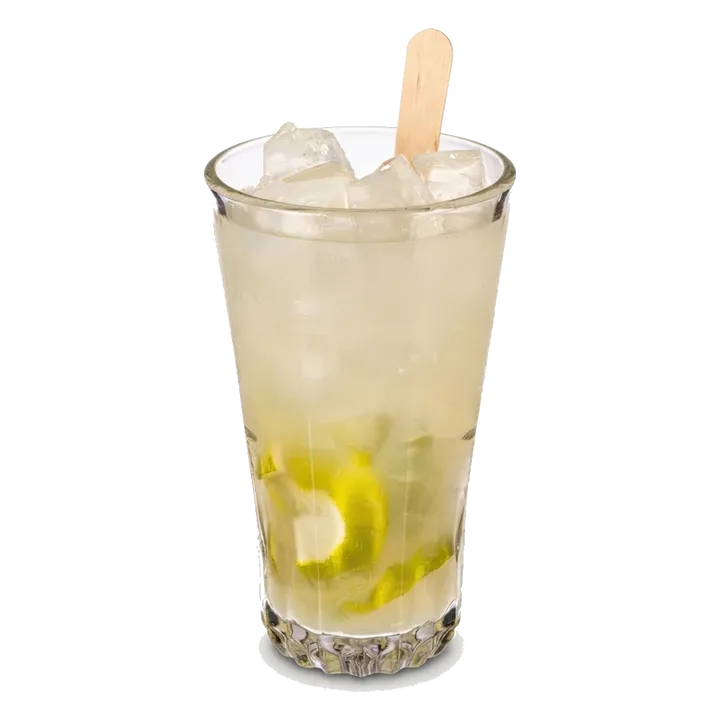
Caipirinha
4.7 374 ratings
Ingredients
How to make
Serve in a highball (max 10oz/300ml)
Prepare
- 1 Select and pre-chill a HIGHBALL (MAX 10OZ/300ML) GLASS.
- 2 Prepare garnish of stirrer (spoon, wooden lolly stick or stick cut from sugar cane).
Method
- 3 Cut a ripe lime in half (from pole to pole) and remove the core from each half by cutting a V-shaped groove. (You'll need one-half of the lime per cocktail.) CHOP into wedges and each wedge chopped in half before dropping the resulting 6 or 8 lime chunks into the base of shaker.
- 4 Add 3 bar spoons powdered sugar [or 15ml (½oz) sugar syrup 2:1] and MUDDLE.
- 5 If using cubed ice straight from the freezer, add chilled water (or optionally add fruit of choice) and MUDDLE some more. If using watery ice then omit some or all of the water/juice.
- 6 When sure the lime's juice is fully extracted and the sugar dissolved, POUR the muddled fruit and sugar into serving glass (preferably a 30cl / 10oz highball glass).
- 7 POUR cachaça (stored in the freezer) into the shaker tin used to muddle and swirl to rinse tin before pouring cachaça into serving glass. STIR to combine with other ingredients.
- 8 FILL glass with small cubes or cracked ice. (If using large ice cubes, crack (rather than crush) four to five large ice cubes using an ICE TAPPER and drop into serving glass.)
- 9 STIR before topping with more ice.
Garnish
- 10 Serve with a stirrer (spoon, wooden lolly stick or stick cut from sugar cane) but no straws.
Flavour profile
History
If European or in North America, you are probably used to this drink being served with crushed ice, but until it has been tried with small cubes or cracked ice, you have not properly experienced a Caipirinha. Muddle the lime and sugar well and stir both before adding ice and after.
The name Caipirinha translates as "country little girl," and this cocktail originated in the countryside of São Paulo state. Numerous stories account for its genesis; one narrative suggests sailors historically consumed citrus juices mixed with spirits to prevent scurvy, but they substituted rum with cachaça upon their arrival in Brazil. A different account claims that in the early 20th century, a mixture of cachaça, lime, honey, and garlic was commonly ingested during the Spanish flu pandemic in the country. This medicinal concoction eventually made its way to the port of Santos, where it acquired the name "Caipirinha." This moniker arose because the primary ingredient, cachaça, was typically sourced from Piracicaba, located in the rural region of São Paulo. Brazil's population largely consists of those with limited means, and domestically produced cachaça is inexpensive. Since the Millennium, premium cachaça brands have emerged, yet they remain affordable when contrasted with imported spirits. Cachaça is the quintessential spirit of the Brazilian people, predominantly enjoyed mixed into Caipirinhas.