
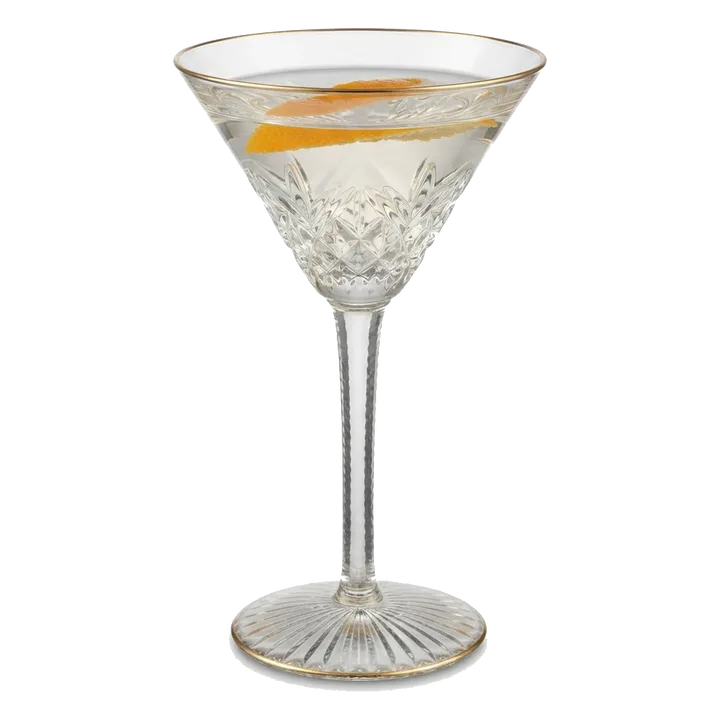
Dry Martini (15:1 ratio) Montgomery's
4.5 128 ratings
Ingredients
How to make
Serve in a martini glass
Prepare
- 1 Select and pre-chill a MARTINI GLASS.
- 2 Prepare garnish of orange zest twist.
Method
- 3 SHAKE all ingredients with ice.
- 4 FINE STRAIN into chilled glass.
Garnish
- 5 EXPRESS orange zest twist over the cocktail and use as garnish.
Flavour profile
29.2% alc./vol. · 1.8 standard drinks · 171 calories
History
Bone dry - a superbly cleansing Martini. 15:1 Martinis are better shaken; 3:1 Martinis are better stirred. Orange zest twist is preferred over lemon zest or olive.
Although its origins are unknown, a 15:1 gin to vermouth Martini was said to be Ernest Hemingway's favorite formula. It is named after British Field Marshal Bernard Montgomery, who reportedly preferred the gin in his Martini to outnumber the vermouth in roughly the same ratio as he liked to outnumber his opponents in battle. Field Marshal Bernard Law Montgomery (1887-1976), nicknamed "Monty", fought and was seriously wounded in the First World War. He became one of the most notorious British commanders in the Second World War, commanding Allied troops at the Battle of El Alamein and playing a key role in planning the Normandy D-Day invasion. On 4 May 1945, he accepted the German surrender at Lüneburg Heath in northern Germany. In chapter four of his 1951 novel, Across the River and Into the Trees, Ernest Hemingway features the book's main character, Colonel Richard Cantwell, ordering Montgomery Martinis at Harry's bar in Venice: "Waiter," the Colonel called; then asked, "Do you want a dry Martini, too?" "Yes," she said. "I'd love one." "Two very dry Martinis," the Colonel said. "Montgomerys. Fifteen to one." "The waiter, who had been in the desert, smiled and was gone and the Colonel turned to Renata." "You're nice," he said. "You're also very beautiful and lovely and I love you." "You always say that and I don't know what it means but I like to hear it." "How old are you now?" "Nearly nineteen. Why?" "And you don't know what it means?" "No. Why should I? Americans always say it to you before they go away. It seems to be necessary to them. But I love you very much, too, whatever that is." "Let's have a fine time," the Colonel said. "Let's not think about anything at all." "I would like that. I cannot think very well this time of day at any rate." "Here are the drinks,' the Colonel said. 'Remember not to say, chin-chin." "I remember that from before. I never say chin-chin, nor here's to you, nor bottoms up." "We just raise the glass to each other and, if you wish, we can touch the edges." "I wish,' she said" The Martinis were icy cold and true Montgomerys and, after touching the edges, they felt them glow happily all through their upper bodies.